




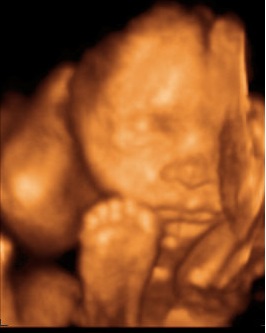
What is 4D Pregnancy Ultrasound?
In the 2000s, pregnancy ultrasound leveled up and 3D ultrasound came into use. Thus, the baby in the womb began to be seen more clearly, and its health status could be evaluated in greater detail. In 2005, 4D ultrasound was developed. Thanks to this, the baby could be seen directly. 3D is length x width x height. So, what is the 4th dimension? It is Time. The examination is carried out in the form of a live broadcast. You will see the baby’s movements simultaneously; you will witness them swallowing, urinating, and smiling. The baby’s health status is seen down to the finest detail with 4D ultrasound. With this evaluation, we not only detect the current situation but you will also learn what needs to be done for the healthy continuation of the pregnancy.
How is it performed?
We desire to contribute to your baby’s health status and boost your energy by showing you 4D videos and photos of your baby. The moment you come to TOMOKAY, you will see that your decision was correct. Pregnancy is one of the most miraculous realities in the world, perhaps the leading one.
As TOMOKAY, we are at your service from the beginning of pregnancy with:
1st Trimester (Level 1) ultrasound in the first three months
2nd Trimester (Level 2) ultrasound in the second three months
3rd Trimester ultrasound in the third three months
Level 2 pregnancy ultrasound must be performed on every pregnant woman. Our recommendation is to have a 4D pregnancy ultrasound performed in the 3rd trimester as well. In this way, we will determine whether the baby is going through a healthy maturation process.
How should I prepare?
For the 4D ultrasound performed in the first 3 months, your bladder must be moderately full (you need to feel the urge to urinate).
No preparation is required for the Level 2 ultrasound.
No preparation is required for the ultrasound in the last 3 months.
When will I receive my results? The examination takes approximately 45 minutes. 15 minutes later, your report and a CD containing 4D images will be provided.
1st Trimester Pregnancy Ultrasound
What is 1st trimester pregnancy ultrasound? Pregnancy lasts for 9 months, and we evaluate it by dividing it into 3 periods consisting of 3 months each. The first three months are called the 1st Trimester, the second three months the 2nd Trimester, and the third three months the 3rd Trimester. In the 1st trimester, the baby’s organs are forming; in the 2nd trimester, they are developing; and in the 3rd trimester, they are maturing and growing. Therefore, the 4D pregnancy ultrasound to be performed in the 1st trimester will show whether the baby’s initial formation is healthy.
In pregnancy ultrasound, we also attend to and evaluate structures outside the baby. Evaluation of the ovaries and their surroundings, the structure of the uterus, evaluation of the cervix (neck of the womb), evaluation of the gestational sac, tracking of placental formation, and the relationship of the placenta with the cervix will be examined.
Visualization of the yolk sac within the gestational sac, visualization of the embryo (in the early period, the clot-shaped baby is called an embryo; we call it an embryo until the 10th week), visualization of the heartbeat in the embryo (at 5.5 weeks), visualization of the head-torso-extremities, umbilical cord, and nasal bone, and measurement of the embryo’s nuchal translucency (must be less than 3 mm) are important. The absence of the nasal bone and thickening of the nuchal translucency in this evaluation increase the possibility of Chromosomal Anomalies, primarily Down syndrome. By evaluating this together with gestational age and the Double Test, it is decided whether aggressive interventional methods such as Chorionic Villus Sampling or Amniocentesis are necessary.
Level 2 Pregnancy Ultrasound
What is Level 2 pregnancy ultrasound? Pregnancy lasts for 9 months… (Standard trimester explanation repeated). We call the detailed ultrasound performed in the 2nd trimester LEVEL 2 PREGNANCY ULTRASOUND. It is suitable to be performed between the 18th and 24th weeks. If there are no other factors, as Tomokay, we recommend the 20th week. In this period, the uterine cavity is spacious. The baby weighs 250-300 grams and is 22-24 cm tall. Therefore, there is enough space in the uterine cavity to position the virtual camera. Additionally, if the baby’s position is far from us or its back is turned, we can ensure the baby turns and approaches us with special maneuvers we have the mother perform. However, when the baby grows, i.e., in the last three months, such maneuvers may not yield results.
At TOMOKAY, in the Level 2 ultrasound which takes approximately 45 minutes, we use the most advanced 4D Ultrasound device. The baby’s head, face, spine, spinal cord, chest, abdomen, arms, hands, fingers, legs, feet, and toes are examined one by one in sequence.
Head: Brain and cerebellum structures, width of the fluid parts of the brain.
Chest: Lungs, heart, main vessels, diaphragm are examined.
Abdomen: Liver, gallbladder, spleen, pancreas, both kidneys, urinary tracts, adrenal glands, bladder, stomach, and intestines are seen and measured one by one.
Limbs: Arms and legs, hands and feet, fingers and toes are examined down to the finest detail.
Fetal Blood Flows: We examine umbilical cord vessels, brain vessels, umbilical vein, and if necessary, other vessels with Color Doppler Ultrasound.
Maternal Uterine Vessels: We examine whether the amount of blood coming to the uterus is sufficient with Color Doppler Ultrasound.
Placenta: (Size, location, degree of adherence to the uterine wall, echogenicity), uterus, and cervix are examined. Ovaries are examined.
We will let you watch these structures both in black and white and in 4D, just like watching a live broadcast on TV. We will also present the 4D Ultrasound pictures and videos to you on CD and as photographs along with the report. Thus, you will always be able to see your baby with your loved ones at home. If you wish, you can have this examination repeated every month.
In Level 2 pregnancy ultrasound, we also examine important structures outside the baby. Evaluation of ovaries and surroundings, structure of the uterus, presence of myomas, evaluation of the cervix, evaluation of the gestational sac, tracking of placental formation, and the relationship of the placenta with the cervix will be examined.
3rd Trimester Pregnancy Ultrasound
What is 3rd trimester pregnancy ultrasound? Pregnancy lasts for 9 months… (Standard trimester explanation repeated). At TOMOKAY, we use the most advanced 4D Ultrasound device in the 3rd-trimester ultrasound, which takes approximately 45 minutes.
In this period, the baby gains weight rapidly, and its height increases. Also, the organs are maturing. Since the baby occupies the uterine cavity as volume, the ultrasound view becomes more difficult compared to the 2nd trimester. The 4D US image quality changes depending on the mother’s physical structure, the baby’s size, and the amount of amniotic fluid. If the baby shows itself, very clear images are obtained, reflecting exactly how the baby will look at birth; however, if the baby does not show itself, the maneuvers we perform to provide a view may not be sufficient.
Our priorities in the 3rd-trimester ultrasound:
Determining the baby’s blood flows.
Detecting the baby’s weight and height, and understanding how many weeks old it is accordingly.
Comparing the ultrasound week with the week according to the last menstrual period to diagnose if there is growth retardation in the baby.
Measuring the amount of amniotic fluid the baby swims in.
Determining the baby’s position in the uterus (head presentation, breech presentation).
Detecting if there is umbilical cord entanglement around the baby’s neck or other parts.
Examining the placenta.
Examining the baby down to the finest detail as much as it shows itself and taking 4D images.
The baby’s birth weight and height are determined according to ultrasound measurements. If the baby is to be born with low birth weight (under 3 kilos), the mother is called for controls for Color Doppler Ultrasound at 1-2 week intervals.
Transvaginal Pregnancy Ultrasound
What is Transvaginal pregnancy ultrasound? Pregnancy lasts for 9 months… (Standard trimester explanation repeated). In the 1st trimester, in the first weeks of pregnancy, Transvaginal ultrasound can be performed to evaluate structures such as the gestational sac, baby (embryo), and yolk sac. These structures are examined by looking very closely at the uterus with an ultrasound probe placed in the vagina (from below). Transvaginal Ultrasound is performed especially in overweight pregnant women, if the uterus is retroverted (tilted backward), or if the baby could not be seen in the abdominal ultrasound.
Visualization of the yolk sac within the gestational sac, visualization of the embryo (baby), visualization of the heartbeat in the embryo (at 5-5.5 weeks), visualization of the head-torso-extremities, umbilical cord, and nasal bone, measurement of the embryo’s nuchal translucency (must be less than 3 mm), and whether there is cyst formation in the lateral ventricles in the cranium are important.
In this evaluation, the non-formation of the embryo’s nasal bone and thickening in the nuchal fluid increase the probability of Chromosomal Anomalies, primarily Down syndrome. By evaluating this together with gestational age and methods like the Double Test or Triple Test, it is decided whether aggressive interventional methods such as Chorionic Villus Sampling or Amniocentesis are necessary. You will not feel any pain or suffering during the transvaginal ultrasound.
How should I prepare? No preparation is required. You can come directly to TOMOKAY. A full bladder is not desired during the examination. It can be performed with a small amount of urine or by completely emptying the bladder. During the US, you will be laid on a special table, and you will be covered with a large drape. Afterward, a transvaginal probe will be inserted into the vagina by a female technician, and our Specialist Doctor will perform the Ultrasound examination. The examination takes approximately 20-30 minutes.